News & Updates
Top Customs Solutions for Hauliers in 2026
The top customs solutions for hauliers in 2026: in-house declaration software, agency processing and hybrid models, plus the workflows, features and training that keep freight moving.
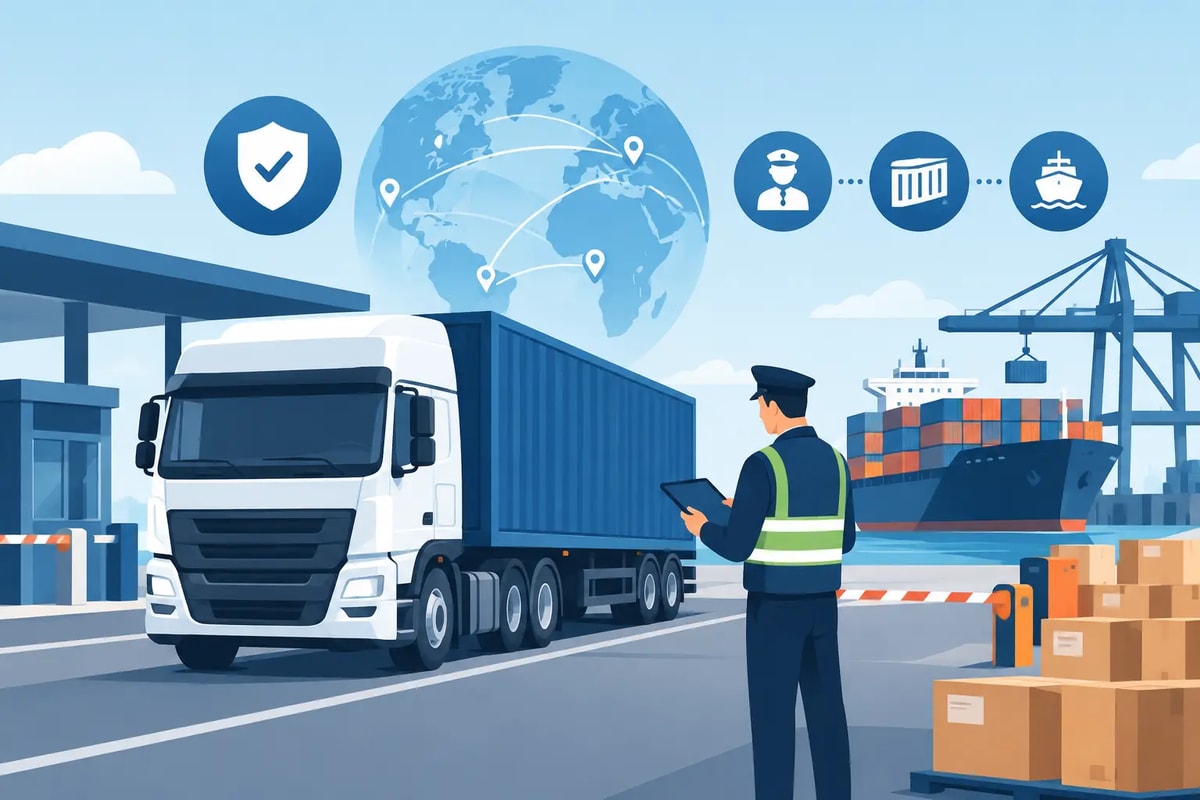
A truck can be loaded, booked on a sailing and ready at the gate, yet still fail to move because a declaration is incomplete, a reference has not been matched, or the driver has been given the wrong information. That is why choosing the top customs solutions for hauliers is not simply a software decision. It is a decision about how reliably your operation can keep freight moving between Great Britain, Northern Ireland, the Republic of Ireland and the wider EU.
For many hauliers, the right answer is not one tool in isolation. It is a workable combination of connected declaration technology, clear responsibility for each movement, trained staff and expert support when the exception cannot wait. The best arrangement depends on your volumes, routes, customer mix and in-house customs capability.
What hauliers need from a customs solution
Haulage businesses work to departure times, collection windows and port cut-offs. Customs processes must fit that operational reality. A system that produces a declaration but leaves the transport team chasing references by email has only solved part of the problem.
The core requirement is direct connectivity to the relevant customs and border systems. For UK movements, this can include HMRC's Customs Declaration Service (CDS), GVMS, Safety and Security GB and NCTS6. For Ireland, operators may also need to manage Revenue systems, including ROS, as well as PBN requirements. Depending on the route and goods, ENS and transit processes may also apply.
A useful solution should give the person completing the job clear prompts, validation before submission and a visible record of what has been sent and accepted. It should also support the information that drivers and planners actually need: movement reference numbers, transit references, goods movement references and any boarding or pre-lodgement details required for the crossing.
The top customs solutions for hauliers are usually combined
There is no single operating model that suits every fleet. A haulier carrying regular consignments for a small group of customers has different needs from a 3PL coordinating hundreds of mixed loads each week. In practice, most effective customs arrangements fall into three models.
In-house declaration software
In-house software gives a haulier or logistics provider control over declarations. Staff can prepare import, export, transit, ENS or safety and security submissions directly, rather than waiting for a third party to process every instruction.
This model works well where volumes are consistent, commodity and customer data can be maintained accurately, and there is a named team responsible for customs. It can reduce per-declaration dependency and give planners greater visibility, particularly for time-sensitive departures.
The trade-off is that control brings responsibility. Your team must understand which party is acting as exporter, importer, declarant or carrier, and they must have the correct commercial documents and authorisations before submitting. Software makes the process easier to manage, but it cannot correct missing values, unclear Incoterms or incorrect commodity codes on its own.
Look for a platform that is easy to use for operational staff, not just customs specialists. Templates, saved party details, reusable commodity data and sensible validation can make a significant difference when new employees are onboarding or a planner is handling an unfamiliar route.
Customs agency processing
An agency service is often the right choice for hauliers with irregular volumes, complex goods, limited internal resource or customers who require hands-on declaration support. An experienced customs agent can prepare and submit declarations, identify missing information and advise on the documents needed before freight reaches the port.
Outsourcing does not remove the haulier's need for a disciplined process. The agency still needs instructions early enough to act, along with invoices, packing information, EORI details, commodity codes, values, origin information and transport details. A late or incomplete instruction will remain late or incomplete, whoever processes the declaration.
Agency support is particularly valuable for exception handling. A shipment selected for a documentary check, a rejected declaration or a change to a transit movement needs a response from someone who understands both the customs requirement and the transport deadline.
A hybrid model
For many growing operators, a hybrid approach is the most practical option. Routine, repeatable movements are processed in-house, while an agency team provides cover for peaks, complex consignments, staff absence and unfamiliar procedures.
This model builds internal confidence without forcing the transport operation to become a full customs department overnight. It also provides an escalation route when a problem is outside the team's experience. Custran's approach combines cloud-based customs software with agency processing, training and operational support, so businesses can choose the level of control that suits their operation.
Build the workflow around the movement, not the declaration
Customs compliance fails most often at the handover points. Sales may have the invoice, the customer service team may have the delivery address, and transport may have the trailer details. If those inputs arrive separately and too late, the declaration becomes a last-minute reconstruction exercise.
Start by mapping the movement from booking to delivery. Identify when the commercial data is received, who checks it, who creates the declaration, who receives the acceptance message and who sends the required references to the driver. Make the escalation route equally clear. If the reference is not returned within an agreed timeframe, does the planner call the customer, the agency or the customs lead?
For groupage and mixed loads, this discipline matters even more. One incomplete consignment can affect a vehicle's departure. Agree a document cut-off that is earlier than the ferry or port cut-off, leaving time to query values, origin, licences or commodity classifications.
A practical workflow should also distinguish between customs responsibility and transport responsibility. Hauliers can support customers with declarations, but the importer and exporter still need to provide accurate underlying data and understand their own obligations. Clear terms of service and written instructions protect all parties from assumptions made under pressure.
Features that reduce friction at the border
When comparing systems, focus less on a long feature checklist and more on whether each feature removes a known delay from your operation. Four capabilities are especially useful for most cross-border hauliers:
- Direct connections to UK and Irish government and port systems, reducing manual re-keying and helping teams work from recognised reference numbers.
- Support for the procedures your routes require, such as import, export, ENS, NCTS6 S&S GB, GVMS and PBN.
- Status visibility and a searchable audit trail, so staff can confirm what was submitted, accepted, amended or cancelled without searching individual inboxes.
- Role-based access and training tools, allowing planners to complete routine tasks while more sensitive amendments and approvals remain with trained customs staff.
Automation can help, particularly where customer, commodity and route data is stable. However, automation should be introduced carefully. A repeated error is still an error, only faster. Validate master data first, monitor initial outputs and keep an experienced person responsible for exceptions.
Training is part of the solution
The best customs platform will not solve uncertainty over basic terms, liability or data requirements. Hauliers need staff who can recognise when a movement requires transit, when pre-lodgement applies, what a driver needs before departure and when to stop a load rather than risk a border failure.
Training should be matched to each role. Transport planners need a practical understanding of booking cut-offs, references and escalation. Customs administrators need deeper knowledge of declarations and supporting data. Drivers need concise, route-specific instructions rather than a lengthy customs manual they cannot use at a check-in lane.
Refresher training is worthwhile when routes change, new customers are onboarded or government processes are updated. It is also useful after disruption. Review what happened, where information was delayed and whether the team could see the issue soon enough to prevent it.
Questions to ask before choosing a provider
Before committing to a customs solution, ask how it handles your actual traffic rather than a standard demonstration movement. Can it support your GB-Ireland routes and the systems involved? Can your team prepare declarations in-house, with expert help available when needed? How quickly can new users be trained? What is the process for an urgent amendment outside normal working hours?
Also ask how data enters the system. Manual entry may be suitable for low volumes, but higher-volume operators may need imports, integrations or reusable records to avoid duplicated work. The right level of integration depends on your volumes and the quality of data in your transport management or customer systems.
Finally, test the support model. Customs is operationally sensitive, and the real measure of a provider is not only how easily a routine declaration is submitted. It is how clearly they help when a movement is held, a message is rejected or a customer has supplied incomplete information close to departure.
A good customs solution gives hauliers more than a way to file declarations. It gives the operation a repeatable process, a clear view of responsibility and the confidence to deal with the exceptions that will inevitably arise. Start with your busiest route, document the handovers and build a process your team can run calmly when the next sailing deadline is approaching.